
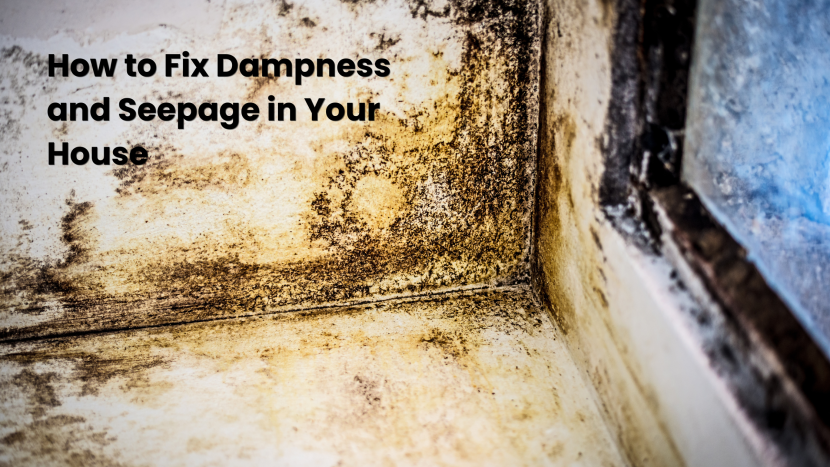
How to Fix Dampness and Seepage in Your House
Dampness and seepage are among the most common, and most damaging, problems in Pakistani homes. If you’ve noticed wet patches on walls, peeling paint, a musty smell, or white salt deposits on plaster, you’re dealing with moisture infiltration. Left untreated, it weakens your RCC structure, destroys finishes, and creates a health hazard. The good news: most seepage problems are fixable if you correctly diagnose the source first.
This guide walks you through identifying the type of dampness, understanding why it happens in Lahore’s climate and construction context, and choosing the right fix, whether you’re in a 5 marla house in Johar Town or a 1 kanal home in DHA.
Why Dampness Happens in Pakistani Houses
Before you spend a rupee on waterproofing, you need to know where the moisture is coming from. Treating the symptom without addressing the source is the most expensive mistake homeowners make, and it’s extremely common.
The main sources of dampness in Lahore homes:
- Rising damp: Groundwater wicking upward through the foundation and plinth walls. Common in older houses or those built without a proper Damp Proof Course (DPC).
- Roof seepage: Water penetrating through a cracked or poorly finished roof slab — especially after Lahore’s monsoon season. Usually shows as staining on the top-floor ceiling.
- Bathroom and kitchen seepage: Leaking pipes, faulty tile grout, or missing waterproofing in wet areas causing moisture to migrate into adjacent rooms.
- Condensation: Warm, humid air hitting cold walls — more of a finishing-level problem but often mistaken for structural seepage.
- Parapet and terrace joints: A major culprit. The junction between the roof slab and parapet wall is almost always the first place to crack and let water in.
- External wall seepage: Poor quality plaster, missing or inadequate external paint, or hairline cracks in the outer skin letting rain in laterally.
How to Diagnose the Source of Seepage Correctly
A simple test: stick a piece of plastic sheeting (polythene) over the damp patch with tape. Leave it for 24–48 hours. If moisture appears behind the plastic (between plastic and wall), you have rising damp or internal pipe leakage. If it appears on the surface of the plastic, it’s condensation.
Other diagnostic steps:
- Check whether dampness worsens after rain — strongly suggests roof or external wall seepage.
- Check whether it appears near a bathroom or kitchen — suspect plumbing leaks first.
- Look for white, powdery deposits (efflorescence) — a clear sign of rising damp pulling salts from the masonry.
- Inspect the roof drain outlets (spouts) — blocked drains are a leading cause of roof ponding and subsequent slab seepage in Lahore homes.
- Tap the plaster — a hollow sound means it has already debonded from the wall due to moisture damage underneath.
If the source isn’t obvious, hire a civil engineer or an experienced waterproofing contractor to inspect before committing to a solution. Skipping this step routinely costs homeowners far more in rework.
Fixing Rising Damp: DPC and Plinth-Level Treatment
Rising damp in an existing structure is the hardest to fix permanently. The ideal solution — a physical DPC (bitumen sheet or two courses of engineering brick set in cement mortar) — is much easier to install during construction. Retrofitting it in a finished house requires cutting into walls, which is disruptive and expensive.
Practical options for an existing house with rising damp:
- Chemical injection DPC: A contractor drills holes at regular intervals along the affected wall at plinth level and injects silicone-based waterproofing fluid. The chemical spreads through the masonry and forms a moisture barrier. Costs roughly PKR 400–800 per running foot depending on wall thickness and product quality. Results vary — quality of injection and product matters enormously.
- Cementitious waterproofing coat: Products like Dr. Fixit Brushbond or Sika Monotop applied in two to three coats on the inner plinth face. Relatively affordable (PKR 80–150 per sq ft in materials), but it’s a surface treatment, not a structural one — it can debond if hydrostatic pressure is high.
- Replastering with waterproof plaster: Hack off the damaged plaster to the brick, clean and treat the substrate, then replaster using OPC cement with a waterproofing admixture (e.g., Sika-1 or Master Builders waterproofer) in the mix. Use a 1:3 cement-sand ratio minimum. This works well for mild rising damp.
None of these solutions work reliably long-term if external drainage around the house is poor. Ensure rainwater drains away from the foundation, not toward it.
Fixing Roof Seepage: The Most Common Problem in Lahore
Roof seepage is the number-one complaint we hear from homeowners — and it makes sense. Lahore gets intense, concentrated rainfall during monsoon. A flat RCC roof that hasn’t been properly waterproofed or maintained will almost certainly seep within a few years.
Step 1: Clear the Roof
Remove old waterproofing layers, dirt, and debris. Check drain outlets — clear any blockage. Standing water (ponding) accelerates slab deterioration fast.
Step 2: Repair Cracks
Use a crack-chasing tool or angle grinder to open hairline cracks to a V-groove, clean out dust, and fill with a polymer-modified cementitious mortar or polyurethane sealant. Don’t just paint over cracks — the patch will fail within one monsoon season.
Step 3: Apply Waterproofing Treatment
Common systems used in Lahore:
| System | Approx. Material Cost (per sq ft) | Lifespan | Best For |
|---|---|---|---|
| Bitumen torch-on membrane (APP/SBS) | PKR 90–150 | 10–15 years | New or major roof rehabilitation |
| Crystalline waterproofing (e.g., Xypex) | PKR 120–200 | Permanent (if slab is intact) | Active seepage through concrete |
| Cementitious slurry coat (Dr. Fixit, Sika) | PKR 60–100 | 5–8 years | Mild seepage, top-up treatments |
| Polyurethane liquid membrane | PKR 150–250 | 10–12 years | Complex roof shapes, parapets |
| Traditional brick bat coba (lime+coal tar) | PKR 35–60 | 5–8 years | Budget retrofits — effective if done correctly |
Note: These are approximate material rates as of mid-2026. Labour and contractor markup are additional. Confirm current rates with your supplier or contractor before budgeting.
For a typical 5 marla house in Lahore, a full roof waterproofing job (torch-on membrane with labour) can range between PKR 80,000 and PKR 200,000 depending on roof condition, system chosen, and contractor. Don’t accept rates drastically below this range without understanding what’s being left out.
Step 4: Pay Special Attention to Joints and Parapets
The parapet-to-roof junction needs a coved fillet (a curved mortar junction, not a sharp 90-degree angle) before any membrane is applied. This is where most roof waterproofing jobs fail prematurely. Apply the membrane at least 6–8 inches up the parapet face.
Fixing Bathroom and Kitchen Seepage
If your bedroom wall is damp and it shares a wall with a bathroom, the problem is almost certainly tile grout failure or a plumbing leak — not structural.
- Plumbing leaks: A plumber should pressure-test concealed pipes. Repairing a broken concealed pipe means opening tiles, which is disruptive but unavoidable. Use quality PPRC or uPVC pipes in any rework — don’t re-bury GI pipe.
- Grout and joint failure: Rake out old grout from tile joints and regrout with an epoxy-based or polymer-modified grout. Pay particular attention to floor-wall junctions and corners.
- Wet area waterproofing: In a full bathroom renovation, apply a cementitious or polyurethane waterproofing membrane to the floor and at least 600mm up the walls before tiling. This step is routinely skipped in Pakistan — and it’s why bathroom seepage is so prevalent in houses just 5–10 years old.
If you’re planning a bathroom renovation, our guide on construction quality checks during finishing covers what to insist on before tiles go on.
Fixing External Wall Seepage
Moisture entering through external walls is common in older Lahore houses with deteriorating external plaster or paint, and in newer houses where the external finish was rushed during construction.
- Hack off loose or hollow plaster sections completely. Applying new plaster over debonded old plaster is wasted money.
- Check brick quality — second-class or under-fired bricks absorb water readily. If brickwork is exposed or porous, a silane-siloxane water repellent can be applied before replastering.
- Replaster with a two-coat system: a scratch coat (1:4 cement:sand) followed by a finish coat (1:5). Add a waterproofing admixture to the mix.
- Finish with a quality exterior-grade elastomeric paint (e.g., Berger WeatherCoat, Dulux Weathershield). Standard interior or economy exterior paints won’t hold up against Lahore’s monsoon.
- Seal window frames: the gap between a window frame and the surrounding masonry is a major lateral entry point for rainwater. Use a polyurethane or silicone sealant, not white cement.
Common Mistakes That Make Seepage Worse
These mistakes are so common on Lahore sites that it’s worth calling them out directly:
- Applying waterproofing over wet surfaces: Cementitious coatings and membranes need a clean, structurally sound, slightly damp (not wet) substrate. Applying on a flooded or contaminated surface means it won’t bond.
- Skipping the protection screed on roof membranes: A torch-on or liquid membrane applied on the roof needs a protection screed (50mm minimum) on top, otherwise foot traffic, heat, and UV destroy it within a year.
- Using cheap, uncertified waterproofing products: The Lahore market is full of unbranded “chemical” waterproofers sold in reused containers. Stick to established brands (Dr. Fixit, Sika, Master Builders, Fosroc) bought from authorized dealers.
- Fixing the symptom, not the source: Applying three coats of paint over a damp wall without fixing the water entry point. It will fail.
- Poor workmanship, good product: A high-end membrane applied by an untrained labourer is often worse than a basic treatment applied correctly. Verify the contractor has done similar work and ask for references.
Planning new construction and want to get waterproofing right from the ground up? See how IHS approaches grey structure quality and construction supervision to avoid these problems entirely.
Rough Cost Estimates for Common Seepage Repairs (Lahore, 2026)
| Repair Type | Approximate Cost Range | Notes |
|---|---|---|
| Roof waterproofing (5 marla, torch-on membrane) | PKR 80,000 – 200,000 | Supply + labour; depends on roof condition |
| Cementitious roof treatment (5 marla) | PKR 30,000 – 70,000 | Budget option; shorter lifespan |
| Chemical injection DPC (per running foot) | PKR 400 – 800 | Plus replastering cost |
| Bathroom wet area waterproofing (one bathroom) | PKR 15,000 – 35,000 | Before tiling; membrane + labour |
| External wall replastering (per sq ft) | PKR 60 – 120 | Includes hacking, replastering, waterproof coat |
| Window/joint sealant (per running foot) | PKR 80 – 150 | PU or silicone sealant |
All figures are indicative estimates. Actual costs vary by area, contractor, material brand, and extent of damage. Always get at least three written quotations before committing.
When to Call a Structural Engineer
Most seepage is a waterproofing or finishing issue — not a structural one. But escalate to a qualified structural engineer if you notice:
- Cracks that are widening over time (mark the ends with a pencil and date them)
- Rust stains bleeding through the slab or columns — this means reinforcement steel is corroding inside the concrete
- Spalling concrete (chunks of slab or beam falling away)
- Major settlement cracks at corners of openings or at beam-column junctions
These go beyond waterproofing and need a proper structural assessment. Don’t let a general contractor talk you into a “patch and paint” on a structural issue.